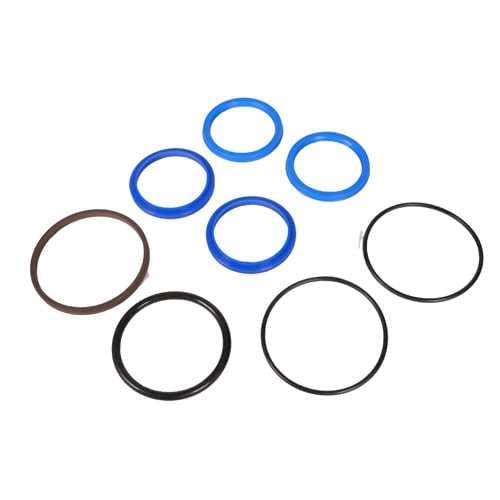
A mast that settles slowly under load is the most common hydraulic complaint we hear, and the cause is usually a seal costing a fraction of the cylinder around it. The difficulty is rarely the repair. It is confirming which component is leaking internally, and then ordering a kit that fits the cylinder actually fitted to the truck.
Confirm it is the cylinder, not the valve
Internal leakage past a lift cylinder piston and a worn control valve spool produce the same symptom, so test before you order. Raise a rated load to a fixed height on a level floor, mark a reference point on the mast and time the settling against the drift limit in the truck's own service manual — manufacturers publish different allowances, so a figure borrowed from another make is not worth much. Then repeat the test with no load. A mast that drifts under load but holds when empty points at the lift circuit; one that drifts either way, or that also loses tilt angle, more often points at the valve section. External weeping down the rod is a separate fault: that is the rod seal and wiper, and it will keep marking the warehouse floor until both are replaced.
What is actually in a kit
A cylinder seal kit is a set, not a single part. It normally holds a piston seal, a rod seal, a rod wiper that keeps dust off the sealing surface, back-up rings and the O-rings for the gland. Fitting only the item that failed is a false economy — the rest of the set has aged in the same oil, at the same temperature, for the same running hours, and stripping the cylinder a second time costs far more than the parts do.
The measurements that identify the kit
Seal kits are specified by the cylinder, not by the truck. Two machines of the same model and year can carry different cylinders if a mast was changed or the truck was built for another market, which is why a model name on its own is not enough to order from. What identifies a kit is the bore diameter, the rod diameter and the function of the cylinder — lift, tilt, side shift or power steering. Bore and rod combinations of 70 and 30 millimetres, or 90 and 45, are common, but measure rather than assume: take the rod with a calliper at a clean, unpitted section, and take the bore from the barrel once the gland is out. Note the stack order of the seals as they come off, and photograph the assembly before it is stripped.
When a kit is not the answer
New seals will not save a cylinder whose rod is scored, pitted or bent, or whose bore is scratched. The set will fail again within weeks against the same damaged surface. While the cylinder is open, inspect the rod for chrome loss and the bore for scoring, and check the return filter and the condition of the oil at the same time, because contamination is usually what wore the seals in the first place. If the rod is damaged, replace the cylinder and keep the seal kits for the units that are still sound.
Send us the truck, not just the part
Send the make, model and serial number of the truck together with the cylinder measurements and a photograph of the assembly, and we will confirm what fits before anything ships. We hold hydraulic seals, gaskets and cylinder components in stock in Budapest for TOYOTA, Linde, Jungheinrich and Komatsu trucks among other makes, deliver across Central Europe, and will come back to you with a quote.